Horror Multiverse: Sandbox
- 3.6
- Rating
- 1.00M
- Installs
- Free
- Price

 Analysis by App-foxy
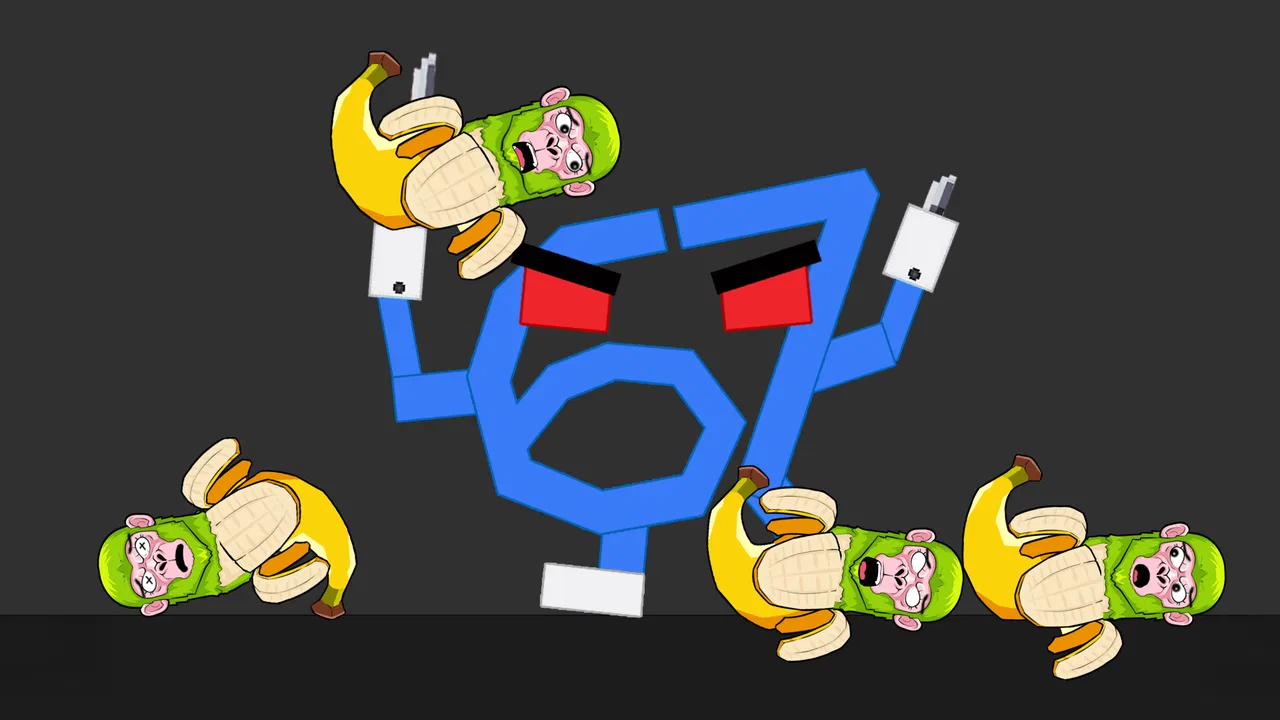
I spent my first sessions with Horror Multiverse: Sandbox treating it less like a traditional horror campaign and more like a toy box built around ragdoll chaos. That distinction matters. The appeal is immediate: you enter a casual playground, experiment with physical reactions, and create messy little scenes instead of following a carefully paced story. It is free to download, aimed at a Teen audience, and developed by Isandares, so the barrier to trying it is low for players who enjoy playful horror rather than sustained tension.
My early impression was positive, but qualified. The game is good at producing quick surprises, especially when I stopped looking for a proper objective and started treating each session as an experiment. The physics are the main event, and the horror setting gives those experiments a darker personality than a standard ragdoll sandbox. At the same time, the novelty can fade if you need missions, progression, or a strong reason to return every day. I would recommend trying it, but I would not automatically call it a permanent game for every casual player.
What the first week feels like
The first few sessions are carried by curiosity. I wanted to see how the characters and objects behaved, what kind of situations I could set up, and whether a scene would play out as expected or collapse into something much stranger. That unpredictability is the strongest reason to install it. A conventional horror game asks me to survive a designed encounter; this one gives me room to arrange a situation and watch the physics turn it into an unexpected spectacle.
You May Also Like

 Blood Strike: 2.5 Anniversary
Blood Strike’s Loadouts Turn Every Drop Into a Tactical Gamble
A close look at Blood Strike’s custom loadouts: how fast access to signature weapons reshapes its battle royale rhythm, rewards preparation, and narrows the gap between fights.

 Pandora - Music & Podcasts
Pandora’s Music Is Easy to Start, but Harder to Recover
Pandora’s strength is its low-effort path from a seed to a station. Its weak spot is how much confidence it asks you to place in connection, setup, and quiet recovery.

 8 Ball Pool
 Is Built on Rivalries, Rematches, and Routine
A close look at the rivalries, rematches, shared routines, and unanswered safety questions that turn a quick pool match into a persistent mobile community.

 Samsung Music
’s Quiet Strength Is Playing What You Already Own
Its reach comes less from spectacle than from dependable access to a personal library. That simplicity is both the app’s strongest retention engine and its ceiling.

 AccuWeather: Weather Radar
AccuWeather Review: A Quick, Clear Forecast for Everyday Decisions
For everyday plans, the best forecast is the one you can understand quickly. AccuWeather makes rain timing, radar, and local conditions easy to act on, with a few trade-offs.

 Hill Climb Racing
Why Hill Climb Racing Still Turns Crashes Into One More Run
A tiny car, a bumpy hill and one more upgrade: Hill Climb Racing keeps resurfacing because its simple chaos makes every near-miss feel personal.
More From Our News Desk
View All News


That makes the game especially suitable for short breaks. I can open it when I have only a few minutes, try one idea, and leave without feeling that I abandoned a complicated storyline. It also works well for players who enjoy sharing amusing discoveries with friends, even when the game itself is being played alone. The best moments are not necessarily polished or frightening. They are the moments when a setup goes wrong in an entertaining way.
The horror theme changes the mood without turning the experience into a serious survival game. I found the tone more mischievous than oppressive, which is useful if you like spooky imagery but do not want constant pressure. Players looking for a deep narrative, carefully written characters, or a long sequence of escalating scares should adjust their expectations before downloading it. The sandbox format places freedom and experimentation ahead of storytelling.
One practical way to approach the opening sessions is to give yourself a small challenge before touching anything. For example, I might try to create a scene where one character reaches a safe area, or arrange several objects so that a single disturbance causes a chain reaction. This self-imposed structure makes the playground feel more purposeful. Without it, I sometimes moved from one experiment to another without building any momentum.
The game’s current version is 1.5.1, and that is useful context for anyone deciding whether to make it a regular part of a mobile library. I experienced it as a compact, accessible sandbox rather than a finished replacement for larger horror or physics games. Its strength is the freedom to play with situations, not the promise of a long campaign. That focus is clear from the start, and players who understand it are more likely to enjoy the first week.
Why the physics carry the experience
Ragdoll behavior gives every setup a degree of uncertainty. If the results were completely predictable, the game would feel like a sequence of simple demonstrations. Instead, the fun comes from making a plan and seeing the scene behave differently from what I imagined. That is also why the game can produce humor even when the visual theme is unsettling.
I found it helpful to make one change at a time when testing a scene. If I added several elements together, it became difficult to understand which interaction created the result. Testing gradually turned the game from random messing around into a small creative process. This is one of the more useful habits for new players, because the sandbox becomes more rewarding when you observe cause and effect rather than simply filling the screen.
Another good approach is to repeat a setup with one detail changed. A character placed slightly differently, or an object introduced at another point, can alter the entire outcome. That kind of comparison gives the game more depth than the short store summary suggests, although it also depends on the player being willing to invent experiments. The application does not need to explain every possible activity if you enjoy creating your own.
Who gets the most from the opening sessions
I would point this game toward players who enjoy physics toys, dark comedy, and open-ended experimentation. It is also a reasonable choice for someone who wants a free casual game that can be played in bursts instead of demanding a long uninterrupted session. The Teen content rating makes it unsuitable for younger children, and parents should consider whether the horror presentation fits the player’s comfort level.
I would be more cautious recommending it to someone who judges every game by progression. If your ideal mobile horror title has chapters, objectives, upgrades, and a clear ending, the sandbox design may feel thin. The same applies to players who prefer precise competitive controls. Unpredictable ragdoll behavior is the point here, so not every result feels controlled or elegant.
The game has passed the one-million-install mark and holds a 3.6 average from roughly two thousand ratings. I read that as a sign of broad curiosity rather than proof that it will satisfy everyone. The audience is large enough to show that the concept has reach, but the middling average also fits my experience: the unusual physics can be entertaining, while the lack of a conventional structure may limit its staying power.
What remains after the novelty settles
After the first week, the important question changes from “What can I make happen?” to “Why do I want to come back?” In the beginning, every interaction feels like discovery. Later, the value depends on whether I can keep inventing scenarios that feel distinct. This is where the game becomes more personal than content-driven. A creative player may continue finding reasons to return, while another player may feel that the main surprise has already been used.
For month-to-month use, I would treat it as a rotation game rather than a daily habit. It works nicely alongside a puzzle game, a story game, or another casual title with clearer goals. I can return when I want a few minutes of unstructured play, then put it aside without losing progress in a larger routine. That low commitment is a strength, but it also means the game may not become the centerpiece of a mobile library.
The most durable use case I found was scenario building. Instead of asking the game to provide endless entertainment on its own, I gave each session a theme: a failed escape, a dangerous room, a deliberately unstable pile of objects, or a test of whether a character could cross an improvised obstacle course. These ideas are simple, but they create a repeatable workflow. I could play, observe, adjust, and try again.
A second useful habit is to keep track mentally of the setups that produce the most interesting reactions. I did not need a formal notebook, but remembering a few successful combinations helped me return with a plan. This prevents the common sandbox problem of opening the game, placing random items, and quitting after the first unremarkable result. The game rewards intention more than passive consumption.
A third insight is that failure is often more valuable than success. When a scene collapses in an unexpected way, I learn more about the physics and usually get a more memorable result. Trying to force a perfect horror tableau can be less entertaining than allowing the ragdolls to create an awkward, chaotic outcome. That trade-off defines the experience: control helps with testing, but unpredictability supplies the personality.
How it compares with more familiar casual games
Compared with a standard casual game built around levels or score chasing, this one offers less direction and more freedom. There is no need to master a repeating puzzle pattern, but there is also less external motivation to continue. Compared with a conventional horror game, it offers more room for playful experimentation and less carefully managed suspense. Compared with a pure physics sandbox, the horror framing gives the scenes a stronger identity, even if it may narrow the appeal for players who prefer cheerful or neutral settings.
That comparison helps clarify when another option is better. Choose a level-based casual game if you want a clear target every time you open the app. Choose a story-focused horror game if atmosphere, character development, and pacing matter most. Choose a broader creative sandbox if you want to build or customize complex projects over long periods. This game sits in the middle: it is a quick, dark physics playground with enough freedom to create situations, but not necessarily enough structure to sustain a demanding long-term routine.
The free entry point makes that trade-off easier to accept. I can test the central idea without committing to a purchase, but the game includes in-app purchases ranging from $0.99 to $29.99 per item. That range is worth keeping in mind before spending. For me, the basic question is whether the free experience already provides enough experimentation. If it does, purchases should be considered optional rather than part of the reason to install the game.
The maintenance burden of keeping it installed
The maintenance burden is relatively light in terms of attention, because the game does not require me to maintain a long story or a complex strategy. I can leave it for a while and return without needing to relearn a large system. That makes it convenient for an irregular player. The burden is instead creative: I have to bring my own ideas if I want the sandbox to remain interesting.
This is a key difference from games that refresh their appeal through missions, collections, or competitive goals. Here, the player supplies much of the renewal. If I keep repeating the same arrangement, the experience naturally becomes less exciting. If I change the scenario, test a new interaction, or invite someone else to suggest a challenge, it can remain useful for longer.
I also found that short, focused sessions are better than forcing a long play period. After enough experimentation, the physics can start to feel repetitive even when the individual results differ. Leaving while the game is still amusing helps preserve its appeal. In that sense, the best maintenance strategy is not constant play; it is controlled spacing.
Storage and device compatibility are straightforward considerations. The game supports Android 7.0 and later, which covers a wide range of devices, while actual comfort can still depend on the phone or tablet in use. I would test the controls and visual clarity early rather than assuming that every screen size will feel equally convenient. A sandbox with many objects is more enjoyable when I can see and manipulate the scene without fighting the interface.
Where fatigue begins
The first source of fatigue is the absence of a strong external goal. Self-directed play is liberating for a while, but it can also become work. If I have to invent every challenge and every reason to repeat it, the game eventually competes with titles that provide a more immediate sense of progress.
The second is the tension between chaos and control. The ragdoll physics create the surprises I enjoy, but they can also make an outcome feel accidental rather than earned. When I want a specific scene to unfold, an unpredictable reaction may be funny once and frustrating the next time. Players who prefer precise results should see this as a central trade-off, not a minor issue.
The third is tonal repetition. The horror setting gives the playground its identity, but the same dark atmosphere may feel narrow after extended use. I enjoyed the contrast between unsettling presentation and silly physical behavior, yet that contrast is strongest when I play in moderation. It is less effective when every session asks for the same kind of reaction.
There is also a financial fatigue point. Because optional purchases can reach $29.99 per item, I would avoid treating the game as a harmless spending loop simply because the initial download is free. I would play the available core first, decide whether I am still returning after the novelty fades, and only then consider whether any purchase genuinely improves my personal use. That approach keeps the decision tied to lasting value rather than first-day excitement.
My long-term verdict
Horror Multiverse: Sandbox earns a place on my device as an occasional creative diversion, not as a guaranteed everyday habit. Its best quality is the way ragdoll physics turn simple setups into unpredictable scenes. The game feels most alive when I experiment, compare outcomes, and accept that the funniest result may be the one I did not plan. That is a specific kind of fun, and it is delivered clearly.
Its limitations are equally clear. The experience depends heavily on player imagination, the horror theme may not suit everyone, and the lack of a conventional progression path can make repeated sessions feel less meaningful. I would not install it expecting a deep campaign or a steady stream of structured reasons to return. I would install it because I want a free casual sandbox where a few minutes of testing can produce strange, amusing, and sometimes unsettling results.
For a friend, my recommendation would be simple: try it during the first week, but judge it again after the initial curiosity has passed. Create your own scenarios, play in short sessions, and decide whether you are returning because you have a fresh idea or merely because the icon is familiar. If you still enjoy building experiments after that test, the game has earned a recurring spot in your rotation.
For me, the lasting value is real but limited. It comes from replaying the physics with new intentions, not from a deep progression system. That makes the game a good fit for players who enjoy making their own entertainment and a poor fit for anyone who needs a clear checklist of rewards. Its long-term strength is creative replayability, while its long-term weakness is that the player must provide the structure. With that expectation in place, this dark sandbox is worth a free trial and can remain enjoyable in moderation.
FAQs for Horror Multiverse: Sandbox
01What is the main objective of Horror Multiverse: Sandbox?
Horror Multiverse: Sandbox is an immersive game where players explore a series of interconnected horror-themed worlds. The main objective is to solve puzzles, defeat various creepy antagonists, and uncover hidden secrets. It provides players with the freedom to create their own narratives within the horror multiverse, making each experience unique and thrilling.
02Can I play Horror Multiverse: Sandbox offline?
Horror Multiverse: Sandbox requires an internet connection to access its full features, including community-driven content and updates. However, some basic elements of the game can be enjoyed offline, such as exploring pre-downloaded worlds. For the best experience, staying connected is recommended to fully engage with the game's dynamic environment.
03What age group is suitable for Horror Multiverse: Sandbox?
Horror Multiverse: Sandbox is designed for mature audiences due to its horror themes, which include intense scenes, suspense, and occasional jump scares. It is recommended for players aged 16 and above. Parents should review the content and settings to ensure it aligns with their comfort levels for younger players.
04Are there in-app purchases in Horror Multiverse: Sandbox?
Yes, Horror Multiverse: Sandbox offers in-app purchases. These allow players to unlock additional content, such as exclusive worlds, special items, and customization options. While the game is free-to-play, these purchases can enhance the gameplay experience. Players can enjoy the core game without spending money, but premium content offers added value.
05How customizable are the worlds in Horror Multiverse: Sandbox?
The game offers extensive customization options, allowing players to modify environments, characters, and story elements. Players can create their own worlds or adapt existing ones using a wide range of tools provided in the game. This flexibility encourages creativity and ensures that each player's journey through the horror multiverse is personalized and engaging.
Pros
- Immersive and chilling atmosphere.
- Wide variety of horror scenarios.
- Customizable gameplay options.
- High-quality graphics and sound.
- Frequent updates with new content.
Cons
- Some scenarios can be repetitive.
- Occasional in-app purchase prompts.
- Requires a stable internet connection.
- Can be resource-intensive on devices.
- Limited offline play options.

Horror Multiverse: Sandbox
Gallery